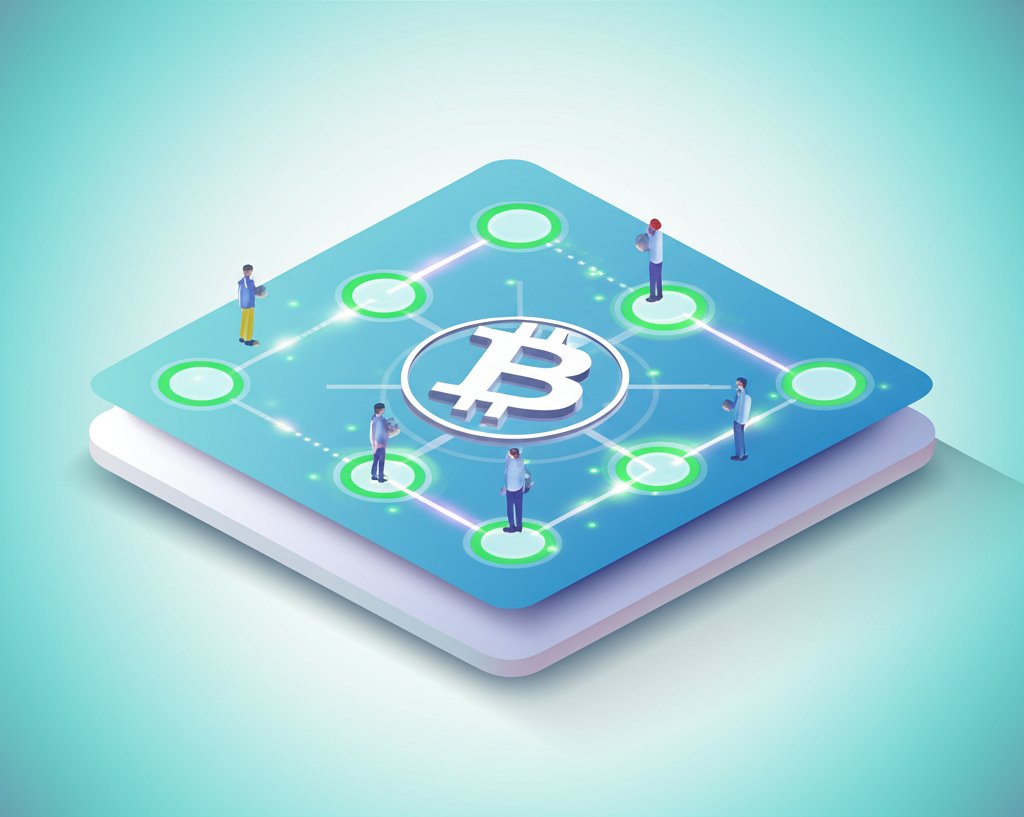
Money, for centuries, has been a tangible thing: coins in your pocket, paper in your wallet, or numbers in a bank account overseen by an institution. But what if money could exist purely in the digital realm, secured by unbreakable codes, and controlled not by a bank or government, but by a global network of computers? That's the fundamental question at the heart of understanding criptomonedas que es y como funciona – what cryptocurrencies are and how they work.
Imagine a financial revolution quietly happening, transforming how we think about value, ownership, and transactions. Cryptocurrencies, often called crypto-assets or crypto-dividends, aren't just a fleeting trend; they represent a paradigm shift in finance. They are digital mediums of exchange that use cryptography to secure transactions, control the creation of new units, and verify the transfer of assets. Crucially, they operate in a decentralized manner, free from the traditional control of central banks or governments.
At a Glance: Key Takeaways About Cryptocurrencies
- Digital Money: Cryptocurrencies exist purely online; there are no physical coins or bills.
- Secure & Private (Mostly): They use advanced encryption to protect transactions and identities, though "anonymous" is a common misconception.
- Decentralized: No single entity (like a bank or government) controls them. They're maintained by a global network.
- Blockchain Powered: A public, tamper-proof digital ledger records every transaction.
- Volatile: Their value can change rapidly, often driven by market sentiment and speculation.
- Many Uses: Beyond investment, they can be used for payments, cross-border transfers, and accessing new financial services.
- Bitcoin Started It All: Created in 2009, Bitcoin was the first, paving the way for thousands of others.
Unpacking the Digital Revolution: What Exactly Are Cryptocurrencies?
At its core, a cryptocurrency is a form of digital money designed to be secure and, in many cases, anonymous. Unlike the dollars, euros, or pesos in your bank account, which are managed by financial institutions and government regulations, cryptocurrencies operate on a fundamentally different principle: decentralization. This means no central authority—no bank, no government, no single company—issues or controls them. Instead, a distributed network of computers validates and records transactions.
This innovative approach makes them distinct from traditional fiat money, which derives its value from government decree. Cryptocurrencies get their value from supply and demand, their underlying technology, and the trust users place in their decentralized and cryptographic security. The concept itself can seem abstract, but it's built on a few robust, interconnected ideas. If you're wondering que es criptomoneda at its most basic level, think of it as digital cash, secured by complex math and managed by everyone who uses it.
The very first cryptocurrency, Bitcoin, emerged in 2009, a mysterious creation by an anonymous entity known only as "Satoshi Nakamoto." Nakamoto envisioned a peer-to-peer electronic cash system, a way for people to send money directly to each other without needing a financial intermediary. This groundbreaking invention laid the foundation for the entire crypto industry, demonstrating that a digital currency could function securely and autonomously. Since then, thousands of other cryptocurrencies have been developed, each with its own unique features and purposes.
The Engine Room: How Cryptocurrencies Actually Work
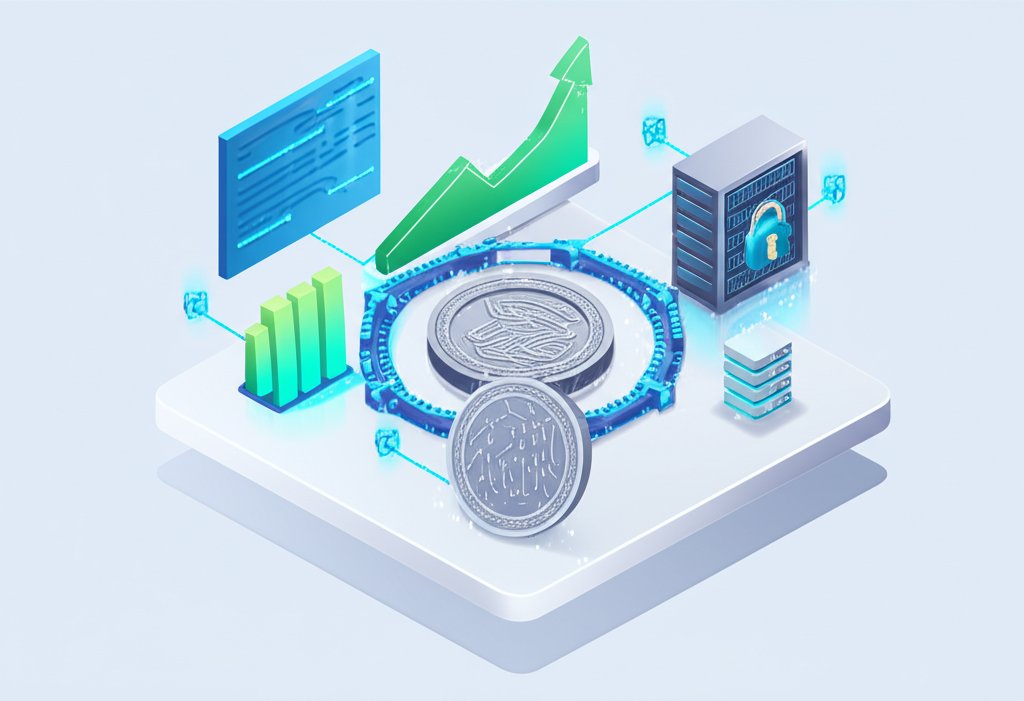
Understanding how cryptocurrencies function requires grasping three core concepts: the blockchain, a decentralized network, and cryptography. These three pillars work in concert to create a secure, transparent, and resilient financial system.
The Blockchain: A Public, Unbreakable Digital Ledger
Imagine a constantly growing, public digital notebook where every single transaction ever made is recorded. That's essentially what a blockchain is. Think of it as a chain of "blocks," where each block contains a list of transactions. Once a block is filled with validated transactions, it's added to the end of the chain, linked cryptographically to the previous block.
This chain isn't stored in one central place. Instead, it's replicated and maintained across thousands of computers (called "nodes") worldwide. This distributed nature is key:
- Transparency: Everyone on the network can see the entire history of transactions.
- Immutability: Once a transaction is recorded in a block and added to the chain, it's virtually impossible to alter or delete it. This is because any attempt to change a past block would require altering every subsequent block across the entire network, which is computationally infeasible.
- Security: The sheer number of copies distributed globally makes the system incredibly resistant to manipulation or censorship. If one copy is attacked, thousands of others remain intact.
When someone says they "sent Bitcoin," what they're really doing is broadcasting a message to the network saying, "I want to transfer X amount of Bitcoin from my public address to this other public address." This proposed transaction then waits to be included in a new block by validators.
The Decentralized Network: Collective Guardianship
Unlike a traditional bank, which has servers and employees managing your account, a cryptocurrency network is run by its participants. These "nodes" are computers that voluntarily join the network, download a copy of the blockchain, and help validate transactions.
This global network is what gives cryptocurrencies their decentralized power. There's no single point of failure, no central authority that can decide to shut down the network or freeze your funds. Participants known as "miners" (in proof-of-work systems like Bitcoin) play a crucial role. They compete to solve complex computational puzzles to validate new blocks of transactions. The first miner to solve the puzzle adds the new block to the blockchain and is rewarded with a certain amount of the cryptocurrency (e.g., new Bitcoin) and transaction fees. This incentive mechanism ensures the network remains robust and secure.
This model fundamentally redefines what a cripto moneda means for ownership and control, moving power from institutions to individuals and the collective network.
Cryptography: The Unbreakable Lock and Key
Cryptography is the backbone of security in the cryptocurrency world. It's the advanced mathematical technique that scrambles information, making it unreadable to anyone without the correct key. In the context of cryptocurrencies, it serves two primary functions:
- Securing Transactions: It ensures that transactions are genuine and haven't been tampered with.
- Controlling Ownership: It allows users to prove they own their funds without revealing their private keys.
Every user in a cryptocurrency network has a pair of cryptographic keys:
- Public Key: This is like your bank account number. You can share it with others, and they can send you funds using this address. It's often represented as a long string of letters and numbers.
- Private Key: This is like your PIN or password. It's a secret alphanumeric code that you must never share. Your private key is what allows you to "sign" and authorize transactions, proving that you are the legitimate owner of the funds associated with your public key. If someone gets hold of your private key, they can access and spend your cryptocurrency.
This cryptographic pairing creates a robust system where only the owner of the private key can initiate a transfer of funds, yet anyone can verify the legitimacy of the transaction on the public blockchain.
Getting Your Hands on Crypto: How to Acquire and Store Digital Assets
You're intrigued, but how do you actually get started? Acquiring and storing cryptocurrencies is far simpler than the underlying technology might suggest, though it requires attention to security.
Acquiring Cryptocurrencies
There are several common ways to obtain cryptocurrencies:
- Buying from Exchanges: This is the most common method. Cryptocurrency exchanges are online platforms where you can buy and sell various cryptocurrencies using traditional fiat currency (like USD or EUR). Popular examples include Coinbase, Binance, Kraken, and many regional exchanges. You link your bank account, debit card, or credit card, and then you can purchase your desired crypto.
- Receiving as Payment: More businesses and individuals are starting to accept cryptocurrencies for goods and services. If you offer a product or service, you can choose to accept crypto as payment.
- Mining: For some cryptocurrencies (like Bitcoin), you can participate in "mining." This involves using powerful computers to solve complex cryptographic puzzles to validate transactions and add new blocks to the blockchain. If you're successful, you're rewarded with newly minted cryptocurrency. However, mining has become highly competitive and energy-intensive, often requiring significant upfront investment in specialized hardware.
- Airdrops: Some new cryptocurrency projects distribute free tokens to a large number of wallet addresses as a marketing strategy or to reward early adopters. These "airdrops" are less common but can be a way to acquire small amounts of new crypto.
Storing Your Digital Wealth: Wallets
Once you acquire cryptocurrencies, you need a secure place to store them. This "place" isn't where the actual crypto units reside (remember, they're just entries on a blockchain); rather, it's where your private keys are stored. These digital storage solutions are called "wallets."
Wallets come in various forms, generally categorized by their connection to the internet:
- Hot Wallets (Online/Connected): These wallets are connected to the internet, making them convenient for frequent transactions but generally less secure for large amounts of crypto.
- Exchange Wallets: When you buy crypto on an exchange, it's often held in an account on that exchange. This is a hot wallet managed by the exchange. While convenient, you don't control the private keys, meaning you don't truly "own" the crypto in the same way you would with a self-custodied wallet. "Not your keys, not your coin" is a common adage here.
- Software Wallets (Desktop/Mobile Apps): These are applications you download onto your computer or smartphone. They give you more control over your private keys than exchange wallets, but your device's security is paramount.
- Web Wallets: Browser-based wallets that allow you to interact with decentralized applications (dApps) and manage your crypto directly from your web browser.
- Cold Wallets (Offline/Disconnected): These wallets are not connected to the internet, offering the highest level of security for storing significant amounts of cryptocurrency.
- Hardware Wallets: Physical devices (looking like a USB stick) specifically designed to securely store your private keys offline. Transactions are signed on the device, meaning your private key never touches an internet-connected computer. Examples include Ledger and Trezor. These are highly recommended for long-term storage of substantial holdings.
- Paper Wallets: A piece of paper with your public and private keys printed on it. While completely offline, they are vulnerable to physical damage or loss and require extreme care in handling and storage.
Choosing the right wallet depends on your needs, how much crypto you hold, and your comfort level with managing your own security. For significant holdings, cold storage, especially hardware wallets, is generally recommended.
Beyond Bitcoin: A World of Digital Assets and Tipos de Criptomonedas
While Bitcoin paved the way, the cryptocurrency ecosystem has blossomed into a diverse landscape with thousands of different digital assets. Each one often has a unique purpose, technology, or economic model. Understanding the main categories of monedas virtuales can help you navigate this complex space.
Here are some of the most prominent types:
- Payment Cryptocurrencies:
- Purpose: Primarily designed as a digital medium of exchange for fast, low-cost transactions.
- Examples: Bitcoin (the original "digital gold"), Litecoin (often called "digital silver" due to its faster transaction times and larger supply than Bitcoin), Bitcoin Cash.
- Characteristics: Focus on decentralization, security, and sometimes, scalability for widespread use as currency.
- Smart Contract Platforms:
- Purpose: These cryptocurrencies power platforms that allow developers to build and deploy "smart contracts"—self-executing agreements with the terms written directly into code. This enables decentralized applications (dApps) and entirely new financial systems (DeFi).
- Examples: Ethereum (the most well-known, with its native token Ether/ETH), Cardano, Solana, Polkadot, Avalanche.
- Characteristics: Highly programmable, robust ecosystems, often with significant potential for innovation beyond simple payments. Ethereum, for instance, is the backbone of most decentralized finance (DeFi) and non-fungible token (NFT) markets.
- Stablecoins:
- Purpose: Designed to minimize price volatility by pegging their value to a "stable" asset, usually a fiat currency like the US dollar.
- Examples: Tether (USDT), USD Coin (USDC), Binance USD (BUSD), Dai (DAI).
- Characteristics: They aim to provide the benefits of blockchain technology (fast transfers, decentralization) without the wild price swings typical of other cryptocurrencies. They are often used by traders to move value quickly between exchanges or to "park" funds during periods of high volatility without converting back to traditional money.
- Utility Tokens:
- Purpose: These tokens grant holders access to specific products or services within a particular blockchain project or ecosystem. They are not intended as investments but rather as a means to "pay" for a function.
- Examples: Filecoin (FIL) for decentralized storage, Basic Attention Token (BAT) for privacy-preserving digital advertising, Chainlink (LINK) for connecting smart contracts to real-world data.
- Characteristics: Their value is typically tied to the demand for the service they unlock.
- Governance Tokens:
- Purpose: These tokens give holders voting rights and influence over the future development and direction of a decentralized project.
- Examples: Uniswap (UNI), Aave (AAVE), Compound (COMP).
- Characteristics: They empower community members to participate in decision-making, embodying the decentralized spirit of many crypto projects.
- Memecoins:
- Purpose: Often created as a joke or based on internet memes, with little to no inherent utility. Their value is almost entirely driven by community hype and social media trends.
- Examples: Dogecoin (DOGE), Shiba Inu (SHIB).
- Characteristics: Extremely volatile and highly speculative. While some have achieved significant market capitalization, they carry substantial risk due to their lack of fundamental value.
This diverse array showcases the ever-evolving nature of cryptocurrencies, moving far beyond just digital cash to encompass a wide range of applications and innovative financial instruments.
The Promise and the Peril: What Can You Do with Cryptocurrencies?
Cryptocurrencies offer a world of possibilities, from simply holding them as an investment to participating in a new global financial system. However, like any emerging technology, they come with their own set of risks and considerations.
Practical Uses and Opportunities
- Global Payments and Remittances: Sending money across borders traditionally involves high fees and slow processing times through banks. Cryptocurrencies, especially those focused on payments, can facilitate near-instant, low-cost international transfers, bypassing traditional intermediaries.
- Investment and Speculation: Many people invest in cryptocurrencies with the hope that their value will increase over time. Their volatile nature also attracts speculators looking to profit from short-term price movements. However, this is a high-risk endeavor.
- Decentralized Finance (DeFi): This is a rapidly growing sector that aims to recreate traditional financial services (lending, borrowing, trading, insurance) using smart contracts on blockchains, eliminating the need for banks and other intermediaries. With DeFi, you can earn interest on your crypto, take out loans, or trade assets directly peer-to-peer.
- Non-Fungible Tokens (NFTs): While not cryptocurrencies themselves, NFTs are digital assets built on similar blockchain technology. They represent ownership of unique items (art, music, collectibles) and have created entirely new digital economies.
- Access to New Technologies: Cryptocurrencies are often integral to accessing and participating in various blockchain-based applications, from gaming to supply chain management.
- Alternative to Traditional Banking: For individuals in regions with unstable economies or limited access to traditional banking, cryptocurrencies can offer an alternative means of saving, sending, and receiving money.
Navigating the Risks and Challenges
While the opportunities are compelling, it's crucial to be aware of the inherent risks:
- Volatility: Cryptocurrency prices can swing wildly in short periods. What's up 20% today could be down 30% tomorrow. This makes them high-risk assets, and you should never invest more than you can afford to lose.
- Security Risks: While the underlying blockchain technology is robust, individual users are responsible for securing their private keys. Hacks of exchanges, phishing scams, and malware can lead to significant losses if proper precautions aren't taken.
- Regulatory Uncertainty: The legal and regulatory landscape for cryptocurrencies is still evolving across the globe. Governments are grappling with how to classify and oversee these assets, which can lead to sudden changes that impact their value or usability.
- Complexity: The technical jargon and underlying mechanisms can be intimidating for newcomers, leading to misunderstandings and poor investment decisions.
- Irreversible Transactions: Once a transaction is validated and recorded on the blockchain, it's virtually impossible to reverse. If you send crypto to the wrong address, it's likely gone forever.
- Scalability Issues: Some older blockchains, like Bitcoin and Ethereum (though Ethereum is undergoing upgrades), can face limitations in processing a high volume of transactions quickly and cheaply, leading to network congestion and higher fees during peak times.
Common Questions and Misconceptions About Cryptocurrencies
The world of crypto is rife with questions and often, misinformation. Let's clear up some common points.
Is Cryptocurrency Anonymous?
Not truly. While transactions don't typically include your real name, they are recorded on a public blockchain with your public wallet address. This means that if your identity can be linked to your wallet address (e.g., through an exchange's KYC "Know Your Customer" process), your transaction history can be traced. It's more "pseudonymous" than anonymous.
Is Cryptocurrency Used Only by Criminals?
Absolutely not. While early adoption by some illicit actors did occur due to the nascent technology, the vast majority of cryptocurrency transactions are legitimate. Law enforcement agencies have become increasingly sophisticated at tracing crypto transactions, making it a less attractive option for illegal activities than many people assume. The transparency of the blockchain can actually aid investigations.
Is It Too Late to Get Into Crypto?
The market is constantly evolving. While the days of Bitcoin's rapid, exponential growth might be behind us, the broader crypto and blockchain ecosystem continues to innovate. New projects, use cases, and technological advancements emerge regularly. Whether it's "too late" depends on your personal financial goals, risk tolerance, and investment horizon. Many believe the technology is still in its early stages of adoption.
Is Bitcoin the Only Cryptocurrency That Matters?
Bitcoin is the most well-known and has the largest market capitalization, but it's far from the only important one. Ethereum powers a vast ecosystem of decentralized applications and financial services. Stablecoins are critical for traders and for reducing volatility. Projects like Solana and Cardano offer alternative smart contract platforms. Each cryptocurrency often serves a different purpose or addresses a specific problem, contributing to a diverse and expanding digital economy.
Are All Cryptocurrencies the Same?
Definitely not. As discussed with the tipos de criptomonedas, they vary wildly in their underlying technology, consensus mechanisms, intended purpose, supply limits, and communities. Some are designed for fast payments, others for complex smart contracts, and some are simply digital collectibles. It's crucial to research any specific crypto before engaging with it.
Do Cryptocurrencies Have Intrinsic Value?
This is a philosophical debate. Like fiat currency, their value isn't backed by a physical commodity like gold. Instead, their value is derived from factors like supply and demand, utility (what you can do with them), the network effect (how many people use them), and the trust placed in their security and decentralization. Some argue that their scarcity and computational security give them inherent value, while others view them as purely speculative.
Your Next Steps: Embracing the Digital Future Responsibly
Understanding criptomonedas que es y como funciona is the first step on a fascinating journey into the future of finance and technology. We've explored the fundamental concepts, from the robust security of the blockchain to the diverse world of digital assets. You now have a solid grasp of how these monedas virtuales operate and the potential they hold.
However, knowledge is just the beginning. The cryptocurrency market is complex, dynamic, and carries significant risk. If you're considering engaging with this space, here are some actionable next steps:
- Educate Yourself Continuously: The crypto world evolves rapidly. Keep learning about new technologies, market trends, and regulatory changes. Follow reputable news sources and experts.
- Start Small: Don't jump in with a large investment. If you decide to buy crypto, begin with a small amount you're comfortable losing, treating it as an educational expense.
- Prioritize Security: Learn about best practices for securing your digital assets. Use strong, unique passwords, enable two-factor authentication (2FA) wherever possible, and seriously consider a hardware wallet for any significant holdings. Be wary of scams and unsolicited offers.
- Understand Your Risk Tolerance: Cryptocurrencies are volatile. Be prepared for significant price swings and don't make decisions based on emotion or fear of missing out (FOMO).
- Seek Professional Advice (When Appropriate): For significant financial decisions, consulting with a financial advisor who understands digital assets can provide tailored guidance.
- Diversify (If Investing): As with traditional investments, don't put all your eggs in one basket. If you choose to invest, consider diversifying across different asset classes and types of cryptocurrencies.
The world of cryptocurrencies offers a glimpse into a decentralized future, empowering individuals and fostering innovation. Approach it with curiosity, caution, and a commitment to continuous learning, and you'll be well-prepared to navigate this exciting new frontier.