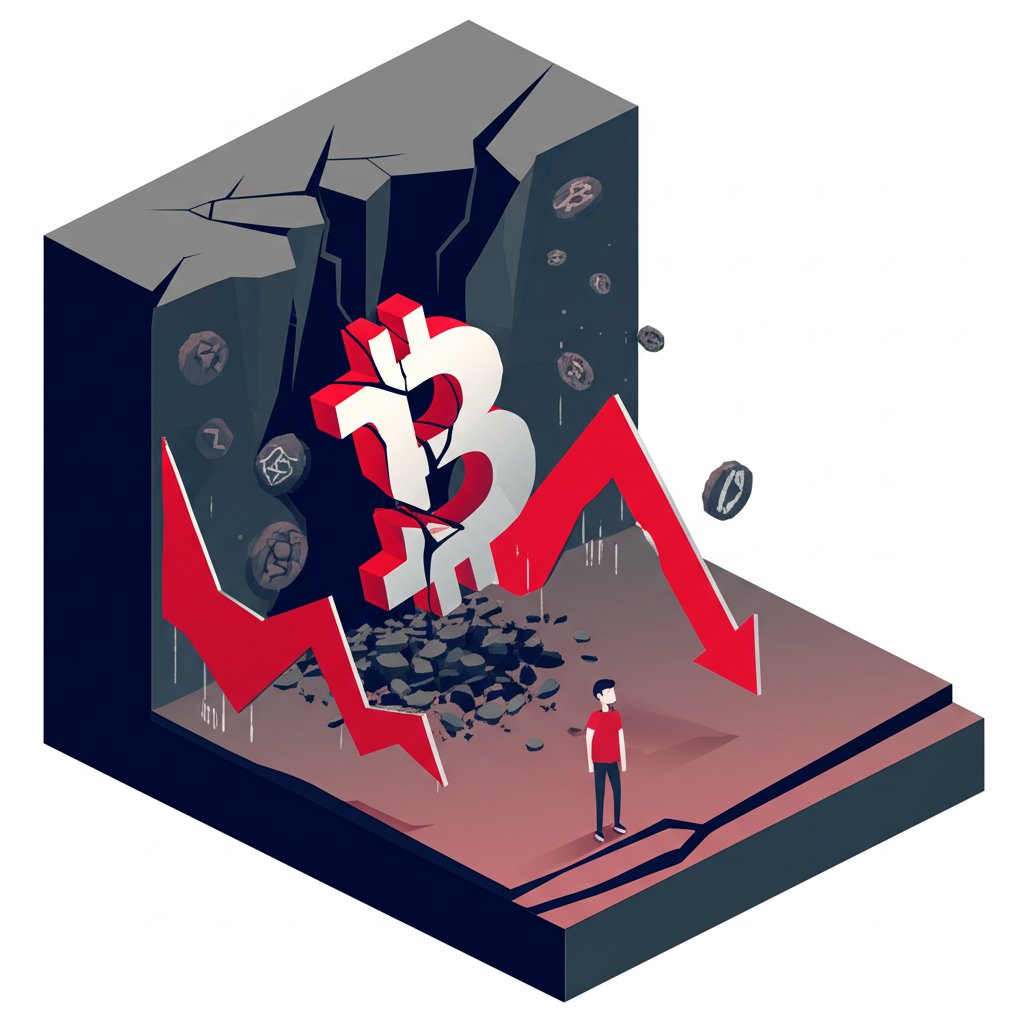
The allure of turning pocket change into a fortune is potent, especially when exploring the vast, volatile landscape of digital assets. For many, the hunt for the lowest cryptocurrency isn't just a pursuit of a bargain; it's a search for the next exponential growth story. But is chasing these ultra-cheap tokens a savvy investment strategy or a high-stakes gamble with overwhelming odds stacked against you?
This isn't about finding the cheapest token by price alone; it's about understanding the complex interplay of potential, risk, and market dynamics that define these frontier investments.
At a Glance: Navigating Lowest Cryptocurrency Buys
- High Risk, High Reward: Low-priced cryptos offer significant upside potential but come with extreme volatility and higher failure rates.
- "Lowest" Isn't Just Price: Evaluate market cap, project stage (presale vs. established), and genuine utility, not just cents per token.
- Beware of Scams: The low entry barrier attracts many legitimate innovators, but also a disproportionate number of rug pulls and pump-and-dump schemes.
- Due Diligence is Non-Negotiable: Research the team, tokenomics, community, technology, and roadmap exhaustively before investing.
- Presales Offer Early Access: Often the lowest entry point, but also the riskiest due to unproven concepts and undeveloped ecosystems.
- Diversify & Limit Exposure: Treat these as speculative bets and only invest what you can afford to lose entirely.
What "Lowest Cryptocurrency" Really Means Beyond the Price Tag
When we talk about the "lowest cryptocurrency," it's easy to focus on absolute price – a token trading for fractions of a cent. However, an experienced investor knows that price per token is only one piece of the puzzle. A token priced at $0.000001 with a quadrillion supply might have a higher market capitalization (total value) than a token priced at $10 with a tiny supply.
Instead, "lowest cryptocurrency" often refers to assets with a low market capitalization, projects in their earliest presale stages, or established coins that have significantly crashed from their all-time highs due to market downturns or project-specific issues. These are the assets that, for various reasons, present a low barrier to entry and, theoretically, the most room for growth if things go right.
The Double-Edged Sword: Why Investors Are Drawn In (and Often Burned)
The primary appeal of lowest cryptocurrency buys is the dream of massive returns. A small investment of $100 in a token trading at $0.0001 could theoretically turn into millions if that token reaches $1. This narrative fuels enthusiasm, attracting both seasoned speculators and new entrants to the crypto space. You get a higher allocation of tokens for your investment, amplifying gains if the project succeeds. For instance, getting in on a presale allows you to acquire tokens at a foundational price, potentially before wider market exposure.
However, this very allure also makes them prime targets for manipulation and outright scams. The crypto market is famously volatile; general market downturns, like those sometimes triggered by broad economic policy shifts such as tariffs, can send even established cryptocurrencies plummeting. This creates moments of extreme fear, but also potential entry points for those looking to buy "low." For a deeper dive into how such macro events can impact the market, you can Read about Trump's crypto crash. These flash crashes can turn once-stable assets into what might temporarily resemble "lowest cryptocurrency" options, offering a different kind of risk and reward.
The risks inherent in low-priced, low-cap cryptos are magnified.
- Extreme Volatility: Prices can swing wildly, often by hundreds or thousands of percent in either direction, within days or even hours.
- Lack of Liquidity: Smaller market caps mean fewer buyers and sellers, making it difficult to enter or exit positions without significantly impacting the price.
- Scam Potential: Many low-cap projects are "rug pulls" where developers abandon the project and disappear with investor funds, or "pump-and-dumps" orchestrated by groups.
- Unproven Technology/Team: New projects may lack a clear use case, a viable business model, or a transparent, experienced team.
- Regulatory Uncertainty: The regulatory landscape for cryptocurrencies is still evolving, which can impact the viability and legality of newer, smaller projects.
Dissecting the Value: What to Look For in Low-Priced Crypto
To genuinely assess whether a "lowest cryptocurrency" is a diamond in the rough or just another pebble, you need to dig deep. Focus on these core areas:
1. The Project's Core Utility and Vision
Does the project solve a real-world problem? What unique value does it offer? Many low-priced tokens are meme coins, but even these can have a compelling community or evolving utility. Others aim to build fundamental infrastructure, like Layer 1 blockchains for speed and scalability (e.g., Netcoin) or Layer 2 solutions to enhance existing networks (e.g., Solaxy on Solana). A clear, concise vision and a demonstrable need for the token itself are critical.
- Example: Solaxy aims to be the first L2 on Solana, addressing scalability. This indicates a focus on solving a known blockchain challenge, giving it more substance than a purely speculative asset.
2. Team Transparency and Experience
Who is behind the project? Are their identities public? Do they have a proven track record in crypto, tech, or relevant industries? Anonymous teams, while not always a red flag, require extra caution. Look for active communication and community engagement from the developers.
3. Tokenomics and Distribution
This is paramount. "Tokenomics" refers to the economics of the token:
- Total Supply: How many tokens exist? A massive supply makes it harder for the price per token to rise significantly, even with high market cap growth.
- Circulating Supply: How many are currently available to the public?
- Distribution: How are tokens allocated (team, advisors, treasury, presale, public sale)? High allocations to the team or private investors can signal future sell-offs.
- Vesting Schedules: Are team tokens locked up for a period? This prevents immediate dumping and aligns incentives with long-term growth.
- Utility: What is the token used for? Staking for rewards (e.g., Wall Street Pepe, Flockerz, Meme Index), governance, transaction fees, in-game currency (e.g., Catslap, The Sandbox, Decentraland), or reduced platform fees (e.g., Best Wallet Token)?
- Burning Mechanisms: Some projects burn tokens (e.g., Catslap burned $1M) to reduce supply and potentially increase scarcity and value.
4. Community and Social Presence
A strong, engaged community can be a powerful driver for low-cap projects, especially meme coins (e.g., Wall Street Memes, Pepeto Token). Look for active discussions on platforms like Discord, Telegram, and X (formerly Twitter). A vibrant community indicates interest and potential for organic growth, but also be wary of bots and coordinated shilling.
5. Technology and Roadmap
Even for presale projects, a whitepaper outlining the technology, development plan, and future goals is essential. Does the technology seem viable? Is the roadmap realistic and ambitious? An audit by reputable firms can provide crucial security assurance.
- Example: SpacePay aims to bridge crypto and traditional payments. Their roadmap would need to detail partnerships, regulatory compliance, and technological integration.
Your Playbook for Engaging with Lowest Cryptocurrency Buys
Approach these investments with a tactical mindset, not a hopeful prayer.
Step 1: Deep, Independent Research (DYOR)
Don't rely on social media hype or anonymous tips.
- Read the Whitepaper: Understand the project's foundation.
- Check the Website and Socials: Look for professionalism, active updates, and community sentiment.
- Analyze the Team: LinkedIn profiles, past projects, any controversies.
- Examine Tokenomics: Tools like CoinMarketCap or the project's own documentation can help.
- Look for Audits: Smart contract audits by firms like CertiK or Hacken are a positive sign.
- Review Partnerships: Credible partnerships lend legitimacy.
Step 2: Identify the Project's Stage and Risk Profile
- Presales (Highest Risk/Reward): These are new projects selling tokens before official launch (e.g., Wall Street Pepe, Solaxy, Flockerz, Best Wallet Token, SpacePay). You're buying into an idea. The process generally involves downloading a compatible crypto wallet (like Best Wallet), adding funds (ETH, USDT, BNB), visiting the presale page, connecting your wallet, confirming the purchase, and claiming tokens after the presale ends.
- Newly Launched (Very High Risk/Reward): Projects that have just gone live on exchanges. Price discovery is volatile.
- Established but Low (Moderate to High Risk/Reward): Cryptocurrencies like XRP, Cardano, Stellar, or Polygon that have established networks but are trading at low prices relative to their potential or past highs. These often have more liquidity and a longer track record, but still carry significant risk.
Step 3: Implement Strict Risk Management
- Allocate Small Amounts: Only invest a small percentage of your overall portfolio that you are comfortable losing entirely. Think of it as a lottery ticket, not a retirement fund.
- Diversify: Don't put all your low-cap eggs in one basket. Spread your speculative capital across several different promising projects.
- Set Exit Strategies: Have a plan for taking profits (e.g., selling a portion when it hits a 2x or 5x gain) and for cutting losses if the project fails to gain traction.
Step 4: Secure Your Assets
- Use reputable exchanges for trading.
- Store larger holdings in hardware wallets (cold storage).
- Be vigilant against phishing scams, especially when connecting wallets to presale sites. Always double-check URLs.
Practical Scenario: Evaluating a Meme Coin with Utility
Let's consider Flockerz ($FLOCK), a meme coin with an ecosystem. On the surface, it's a meme coin, often dismissed as pure speculation. However, our ground truth research shows it has a Vote-to-Earn mechanism and staking with APY up to 400%. This moves it beyond a typical meme coin into something with some functional utility. An investor would need to:
- Validate the Vote-to-Earn: Does it work? Is it decentralized? What are the voting proposals about?
- Verify Staking Rewards: Is the 400% APY sustainable? How are new tokens generated for rewards?
- Community Health: Is the community genuinely engaged, or is it mostly bots and short-term traders?
This deeper look helps differentiate it from a zero-utility coin, though it still carries the inherent risks of a meme coin.
Quick Answers: Common Questions About Lowest Cryptocurrency
Q: What's the real definition of "lowest cryptocurrency"?
A: It's subjective. While often referring to assets priced under a dollar or even a few cents, a more practical definition considers market capitalization. A project with a market cap under $50-100 million might be considered "low-cap" or "lowest," regardless of its per-token price. It implies a high potential for growth (if successful) and typically higher risk due to lower liquidity and less established presence.
Q: Are all low-priced cryptocurrencies scams?
A: Absolutely not. Many legitimate, innovative projects begin with low prices and market caps during their presale or early launch phases. However, the low barrier to entry for launching a token also attracts a disproportionate number of fraudulent schemes. Due diligence is crucial to distinguish between promising ventures and outright scams.
Q: When is the best time to buy the lowest cryptocurrency?
A: Historically, the lowest prices for promising projects are often during their presale or initial launch phases. This is when early investors get in before wider market exposure. However, this is also the riskiest time, as the project is still unproven. Another potential time is during significant market downturns when even established, fundamentally strong projects might trade at temporarily depressed prices.
Q: How much should I invest in lowest cryptocurrencies?
A: Only invest what you can comfortably afford to lose. Given the extremely high risk associated with these assets, a common strategy is to allocate a very small portion of your overall crypto portfolio (e.g., 1-5%) to these speculative plays.
Q: What about transaction fees for low-value transfers?
A: When dealing with very low-priced tokens, transaction fees can eat into your capital significantly. For transferring crypto, networks like Stellar (XLM) and Ripple (XRP) are known for their extremely low fees and fast transaction times, making them cost-effective choices for moving funds between exchanges or wallets.
Moving Forward: A Measured Approach to High-Risk, High-Reward
Investing in the lowest cryptocurrency can feel like a thrilling quest for astronomical returns, and sometimes, those stories materialize. Projects like SpacePay, aiming to integrate crypto payments, or Meme Index, providing exposure to a basket of meme coins, present intriguing, albeit speculative, value propositions. The key is to shift your mindset from a gambler's hope to an analyst's rigor.
Understand that success stories like BitTorrent New – which at one point traded for fractions of a cent – are outliers, not the norm. For every token that surges, hundreds languish or disappear. By embracing a disciplined research process, implementing stringent risk management, and never investing more than you're willing to lose, you can navigate this high-stakes corner of the crypto market with a clearer head and a better chance of spotting genuine potential amidst the noise.