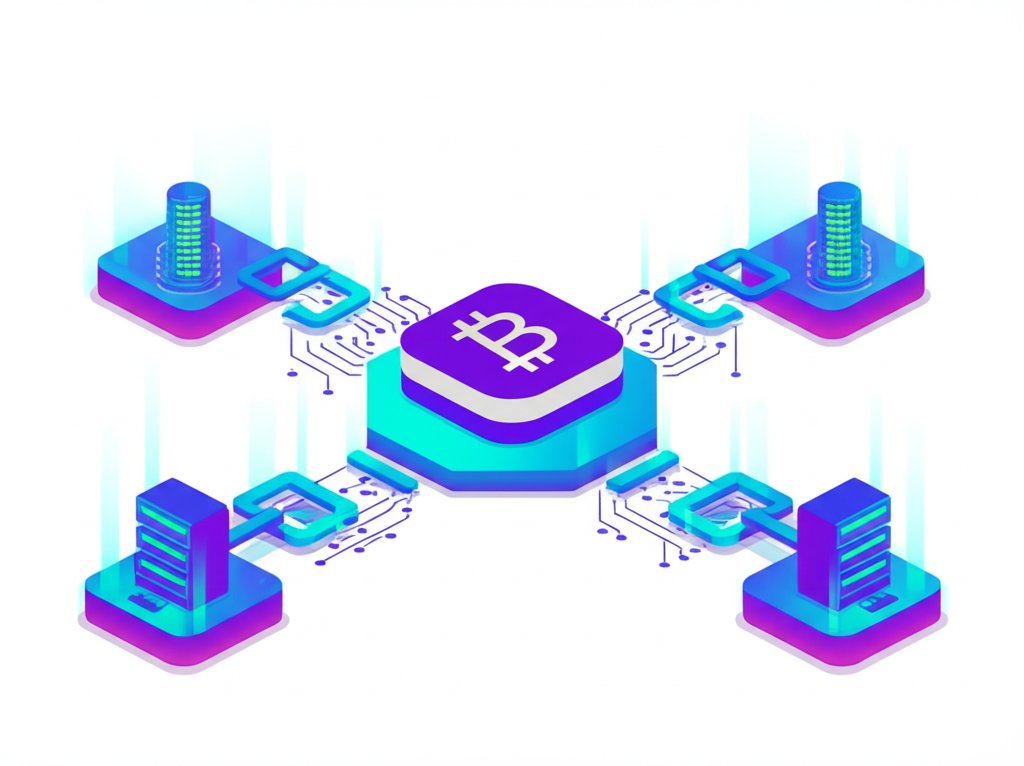
Imagine a world where your money isn't controlled by any single bank or government, where transactions happen directly between people across the globe in moments, and where financial services are open to anyone with an internet connection. This isn't a futuristic fantasy; it's the reality enabled by monedas virtuales, also known as cryptocurrencies. These digital assets are fundamentally changing how we think about money, value, and financial systems. But what exactly are they, and how do they actually operate behind the scenes?
This article dives deep into the core mechanics and practical implications of these innovative digital currencies, giving you the clarity and actionable insights you need to understand their impact.
At a Glance: Understanding Monedas Virtuales
- Decentralized Digital Money: Learn how cryptocurrencies operate without central banks or traditional financial intermediaries.
- Blockchain Explained: Grasp the underlying technology that secures and verifies every transaction.
- How Transactions Work: Discover the role of miners and stakers in validating transfers and creating new units.
- Key Categories & Uses: Explore the diverse types of cryptocurrencies—from stablecoins to utility tokens—and their real-world applications.
- Practical Steps for Engagement: Understand the basic process of acquiring and managing these digital assets.
- Navigating Risks: Recognize the inherent volatility and security considerations.
Unpacking the Core: What Are Cryptocurrencies?
At its heart, a cryptocurrency, or 'moneda virtual', is a digital medium of exchange. Unlike the physical cash in your wallet or the balance in your bank account, virtual currencies exist purely as digital entries, secured by advanced cryptographic methods. This digital nature allows them to be transferred directly between users (peer-to-peer) without needing a bank, a credit card company, or any other traditional go-between.
Their defining characteristic is decentralization. No single entity—no government, no corporation, no central bank—controls the network. This contrasts sharply with traditional fiat currencies like the US dollar or Euro, which are issued and regulated by central authorities. The value of these digital assets, much like many traditional investments, is primarily determined by the forces of supply and demand in open markets.
The concept of a truly decentralized digital currency solidified with the arrival of Bitcoin (BTC) in 2009. Created by an anonymous entity known as "Satoshi Nakamoto," Bitcoin was not just the first cryptocurrency; it introduced the groundbreaking technology that underpins virtually all virtual currencies today: the blockchain. Bitcoin also set a precedent by having a limited supply, capped at 21 million units, a design choice that many subsequent cryptocurrencies have adopted. Its success paved the way for thousands of other digital assets, each with unique features and purposes.
The Engine Room: How Monedas Virtuales Actually Work
Understanding how 'monedas virtuales' function means getting to grips with their foundational technology: the blockchain.
The Blockchain: A Public, Distributed Ledger
Imagine a meticulously kept digital ledger, but instead of being stored in one place, it's simultaneously held and updated by thousands of computers (nodes) across the globe. This is the essence of blockchain technology. Each 'block' in this chain contains a list of transactions, and once a block is filled and validated, it's cryptographically linked to the previous one, forming an unbreakable 'chain'.
This distributed nature means no single point of failure exists, making the system highly resistant to fraud or manipulation. If someone tried to alter a transaction in one copy of the ledger, it wouldn't match the thousands of other copies, and the alteration would be immediately rejected by the network. This makes blockchain an incredibly secure and transparent way to record ownership and transfer assets.
From Transaction to Confirmation: The Validation Process
When you send 'monedas virtuales' from your digital wallet to someone else's, that transaction doesn't immediately appear in the blockchain. First, it needs to be validated and added to a new block. This validation process is crucial for network integrity and varies depending on the cryptocurrency's design.
- Proof of Work (PoW) - The Miners' Role: Bitcoin, for instance, uses a system called Proof of Work. Here, specialized computers, known as "miners," compete to solve complex mathematical puzzles. The first miner to find the solution gets to add the next block of transactions to the blockchain and is rewarded with newly minted bitcoins, plus transaction fees. This energy-intensive process secures the network, making it incredibly difficult for malicious actors to overwhelm.
- Proof of Stake (PoS) - The Stakers' Contribution: Many newer cryptocurrencies and even older ones like Ethereum (which transitioned from PoW) use Proof of Stake. In this model, instead of solving puzzles, users "stake" or lock up a certain amount of their cryptocurrency as collateral. Those who stake more have a higher chance of being chosen to validate new blocks and earn rewards. This method is generally more energy-efficient than PoW and aims to incentivize network security through ownership.
Once a transaction is validated and added to a block, it becomes a permanent, irreversible part of the blockchain. This process ensures that assets can be transferred directly between users (peer-to-peer) without the need for traditional intermediaries like banks, which usually impose higher fees and longer processing times.
Your Digital Key: Wallets and Private Keys
To interact with 'monedas virtuales', you need a digital wallet. This isn't a physical wallet holding cash, but a software application or hardware device that stores your public and private cryptographic keys.
- Public Key: Think of this as your cryptocurrency bank account number. You can share it freely for others to send you funds.
- Private Key: This is your secret password, much like the PIN for your debit card, but far more critical. It's the unique string of characters that proves you own the cryptocurrencies associated with your public key and authorizes transactions. Losing your private key means losing access to your funds forever. There's no "forgot password" button or customer service line to recover it because of the decentralized nature of these systems.
A Diverse Ecosystem: Different Kinds of Monedas Virtuales
While Bitcoin might be the most famous, the world of 'monedas virtuales' is vast and diverse. Beyond the pioneering Bitcoin, thousands of other cryptocurrencies exist, each serving different purposes and built with varying technologies. Popular examples include Ethereum (ETH), known for its smart contract capabilities, Litecoin (LTC), often called "digital silver," and Solana (SOL), praised for its high transaction speed.
These digital assets can be broadly categorized based on their design and function:
- Stablecoins: These are designed to minimize volatility, a common concern with cryptocurrencies. Their value is typically pegged, or "stable," relative to a traditional asset, such as a fiat currency (e.g., the US dollar) or precious metals like gold. For example, Tether (USDT) and USD Coin (USDC) are stablecoins designed to maintain a 1:1 value with the US dollar, making them useful for transactions and reducing risk in volatile markets.
- Privacy Coins: As the name suggests, these cryptocurrencies prioritize anonymity and privacy in transactions. They employ various cryptographic techniques to obscure transaction details, sender, and recipient identities, offering a higher degree of privacy than other cryptocurrencies. Monero (XMR) and Zcash (ZEC) are prominent examples in this category.
- Tokens: Often built on existing blockchain platforms (like Ethereum), tokens represent a wide array of digital assets or utilities within specific ecosystems. They are fundamental to the burgeoning sector of Decentralized Finance (DeFi), where they can represent voting rights in governance (governance tokens), access to services, or even fractions of real-world assets. Examples include Uniswap (UNI), which is a governance token for a decentralized exchange, and Chainlink (LINK), which powers decentralized oracles providing real-world data to blockchains.
What Can You Actually Do with Cryptocurrencies?
The utility of 'monedas virtuales' extends far beyond just investment. They are increasingly integrated into various aspects of the digital economy:
- Online Purchases: A growing number of online merchants now accept cryptocurrencies as a form of payment, offering a secure and often lower-fee alternative to traditional payment methods.
- Global Money Transfers: Sending money across borders can be slow and expensive with traditional banking systems. Cryptocurrencies allow for near-instantaneous global transfers with significantly lower fees, making them a powerful tool for remittances and international business.
- Investment and Speculation: Many treat cryptocurrencies as an investment asset, similar to stocks or commodities, hoping for appreciation in value. This is, however, a high-risk activity due to their extreme price volatility. Investors engage in buying, selling, and holding different 'monedas virtuales' based on market trends and personal risk tolerance.
- Decentralized Finance (DeFi): This is perhaps one of the most transformative applications. DeFi uses blockchain technology to recreate traditional financial services—like lending, borrowing, insurance, and trading—without relying on traditional banks or financial institutions. Users can lend out their crypto assets to earn interest or borrow against them, all through automated smart contracts on a blockchain. This democratizes access to financial services, especially for the unbanked.
For a broader understanding of the ecosystem and foundational concepts, you can Get cryptocurrencies explained in our main guide.
Getting Started with Monedas Virtuales: A Practical Playbook
Ready to explore the world of 'monedas virtuales'? Here's a simplified guide to how most people begin:
- Choose a Reputable Exchange: Your first step is typically to sign up with a cryptocurrency exchange platform. These are online marketplaces where you can buy, sell, and trade various cryptocurrencies. Look for exchanges with strong security, competitive fees, and a good track record. Popular options include Coinbase, Binance, Kraken, and Gemini, among many others.
- Verify Your Identity (KYC): Due to regulatory requirements designed to prevent money laundering and fraud, most legitimate exchanges will require you to complete a "Know Your Customer" (KYC) process. This involves providing personal identification documents (like a driver's license or passport) to verify your identity.
- Fund Your Account: Once verified, you'll need to link a payment method to your exchange account. This usually involves connecting your bank account, debit card, or credit card to deposit fiat currency (like USD) that you'll use to purchase cryptocurrencies.
- Buy Your First Cryptocurrency: Navigate to the trading section of the exchange, select the cryptocurrency you wish to buy (e.g., Bitcoin, Ethereum), enter the amount, and confirm your purchase.
- Secure Your Assets in a Digital Wallet: While exchanges offer convenience, they are centralized entities and can be targets for hackers. For greater security, especially for larger holdings or long-term investments, it's highly recommended to transfer your cryptocurrencies to a personal digital wallet. These can be:
- Hot Wallets: Software-based wallets (desktop, mobile apps, web-based) that are connected to the internet. Convenient but potentially more vulnerable.
- Cold Wallets: Hardware wallets (physical devices) or paper wallets that store your private keys offline. Considered the most secure method for storing cryptocurrencies.
Remember the cardinal rule: "Not your keys, not your crypto." If an exchange holds your private keys, you don't have ultimate control over your assets.
Navigating the Landscape: Risks and Rewards
The potential of 'monedas virtuales' is immense, but it's crucial to approach them with a clear understanding of the risks involved.
- High Volatility: Cryptocurrencies are famous for their dramatic price swings. A 'moneda virtual' can gain or lose significant value in a short period, posing a substantial risk of capital loss. This volatility is driven by market sentiment, news, technological developments, and regulatory changes.
- Security of Private Keys: As highlighted earlier, the security of your funds hinges on the security of your private key. If it's lost, stolen, or compromised, your assets are irrecoverable. Diligent practices like using strong, unique passwords, two-factor authentication, and securing cold storage solutions are paramount.
- Regulatory Uncertainty: The regulatory landscape for cryptocurrencies is still evolving across different countries, leading to uncertainty and potential changes that could impact their legality, taxation, and use.
- Scams and Fraud: The decentralized and somewhat unregulated nature of the crypto space, combined with its high-tech veneer, unfortunately attracts scammers. Be wary of unsolicited offers, promises of guaranteed returns, and projects that seem too good to be true.
On the flip side, the rewards can be significant. Early adopters of Bitcoin and Ethereum have seen astronomical returns. Beyond financial gains, the ability to transact globally, access new financial services through DeFi, and participate in truly decentralized governance structures represents a paradigm shift.
Quick Answers to Common Questions
Q: Are cryptocurrencies legal?
A: The legality of 'monedas virtuales' varies significantly by country. Many major economies have adopted regulatory frameworks, making them legal for use, trading, and investment, but specific rules regarding taxation, usage, and types of crypto assets can differ greatly. Always check the regulations in your jurisdiction.
Q: What determines the price of a cryptocurrency?
A: Fundamentally, the price of a 'moneda virtual' is determined by the basic economic principles of supply and demand. If more people want to buy a cryptocurrency than sell it, its price tends to rise, and vice versa. Other factors influencing price include technological advancements, adoption rates, media coverage, regulatory news, and overall market sentiment.
Q: Are transactions in virtual currencies anonymous?
A: While often perceived as anonymous, most cryptocurrency transactions (like Bitcoin) are pseudonymous. The transactions are recorded on a public blockchain, and while your real-world identity isn't directly attached to your wallet address, advanced analysis can sometimes link addresses to individuals or entities, especially if you interact with regulated exchanges that require KYC. Privacy coins, however, are specifically designed to offer greater anonymity.
Q: Is it safe to invest in cryptocurrencies?
A: Investing in 'monedas virtuales' carries significant risk due to their high volatility and the potential for loss. It's crucial to only invest what you can afford to lose, conduct thorough research on any project, diversify your holdings, and prioritize strong security practices for your digital assets. No investment is 100% safe, and cryptocurrencies are particularly high-risk.
Your Next Steps in the World of Monedas Virtuales
Understanding 'monedas virtuales' means grasping a new paradigm for digital finance. From the foundational blockchain technology that ensures secure, transparent transactions to the diverse range of digital assets serving specific functions, the ecosystem is rich with innovation.
Your journey into this space should start with education. Understand the mechanics, the different types, and the practical ways you can interact with them. Then, if you decide to engage, proceed with caution: prioritize security for your digital assets, thoroughly research any platform or asset you consider, and be mindful of the inherent volatility. The world of digital currencies offers exciting opportunities, but like any powerful tool, it requires informed and responsible handling.