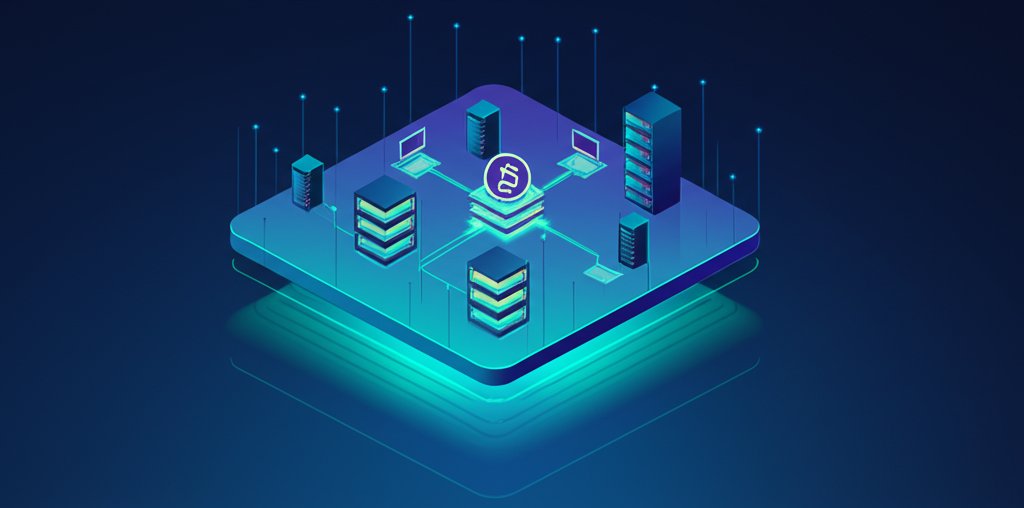
In the world of cryptocurrency, understanding the core concepts can feel like deciphering a secret language. But strip away the jargon, and you'll find elegant solutions to age-old problems. One of the most fundamental of these solutions is the ledger. So, what is a ledger in cryptocurrency? Simply put, it's the ultimate record keeper—a decentralized, unchangeable database that meticulously logs every single transaction on a network. Think of it as the ultimate public accounting book, where every entry is verified by a global network, not a single institution, and once recorded, it’s set in stone.
This digital ledger, most famously known as a blockchain, is the heartbeat of any cryptocurrency. It's what ensures that when you send Bitcoin, it actually leaves your wallet and arrives at its destination, without anyone being able to double-spend or alter the record. It's the engine driving trust in a trustless environment, bringing transparency and security to financial interactions previously unimaginable.

At a Glance: What You Need to Know About Crypto Ledgers
- Core Function: A digital, distributed database that records all transactions on a cryptocurrency network.
- Most Common Form: The blockchain, a chronological chain of transaction blocks.
- Decentralized: Maintained by a global network of computers (nodes), not a single entity.
- Immutable: Once a transaction is recorded, it cannot be changed or deleted. Ever.
- Transparent: Transactions are generally visible to all network participants (though identities can be pseudonymous).
- Secured by Cryptography: Uses advanced math to verify and protect transaction data.
- Consensus-Driven: The network agrees on the ledger's state through mechanisms like Proof of Work (PoW) or Proof of Stake (PoS).
- Beyond Money: Powers not just cryptocurrencies but also decentralized applications (DApps), supply chains, digital identity, and more.
Beyond the Bank Book: Why Decentralized Ledgers are Revolutionary
For centuries, ledgers have been the backbone of commerce and finance. From ancient clay tablets to modern bank statements, they've tracked who owes what to whom. But these traditional ledgers share a critical flaw: they are centralized. A bank, a government, or a single company holds the master copy, and you have to trust them implicitly to maintain its integrity. This means they can be manipulated, censored, or become single points of failure.
Cryptocurrency ledgers fundamentally shift this paradigm. Instead of one trusted entity, the ledger is distributed across thousands, sometimes millions, of computers worldwide, known as "nodes." Each node holds a copy of the entire ledger, and they all work together to verify and record new transactions. This radical decentralization makes the system incredibly resilient, secure, and transparent. No single party can control it, no single point of attack can bring it down, and everyone can see the rules being followed.
It’s this very shift—from a centralized trusted authority to a distributed, cryptographically secured, and consensus-driven network—that makes a crypto ledger not just an accounting tool, but a foundational technology for a new era of digital trust and ownership.
Dissecting the Digital Ledger: Core Features That Build Trust
What makes a crypto ledger, especially a blockchain, so robust and trustworthy? It boils down to a few critical features that work in concert:
1. Decentralization: No Single Boss
Imagine a document that hundreds of thousands of people hold a copy of. If one person tries to alter their copy, everyone else's copy will immediately show a discrepancy, invalidating the change. That's decentralization in action. The ledger isn't stored in one place or controlled by one entity. Instead, it's distributed across a vast network of computers (nodes). This distribution means:
- No Single Point of Failure: If one node goes offline, the network keeps running.
- Censorship Resistance: No single entity can stop transactions or alter the rules.
- Reduced Corruption: It's incredibly difficult for one party to manipulate the ledger without being detected by the rest of the network.
2. Immutability: Written in Digital Stone
Once a transaction is recorded on a crypto ledger, it's permanent. It cannot be altered, deleted, or reversed. This "immutability" is achieved through advanced cryptography, specifically hashing. Each new block of transactions is cryptographically linked to the previous one, forming a chain. Changing an old block would require re-calculating all subsequent blocks, which is computationally infeasible for a large, active network.
- Auditable History: Every transaction from the genesis (first) block to the latest one is openly verifiable.
- Enhanced Security: Prevents fraud like double-spending, where someone tries to spend the same digital money twice.
3. Transparency: See It for Yourself
Most public cryptocurrency ledgers are transparent. This means that while individual identities might be pseudonymous (represented by a wallet address rather than a name), every transaction—sender, receiver, amount, and timestamp—is visible to anyone who wants to inspect the ledger.
- Public Scrutiny: Everyone can verify the integrity of the network and confirm transactions.
- Accountability: Misbehavior is quickly identified by the network.
4. Security: The Crypto in Cryptocurrency
Cryptographic techniques are the bedrock of ledger security. They ensure that transactions are legitimate, data is protected, and the ledger's integrity is maintained.
- Hash Functions: These mathematical functions turn any input data (like a block of transactions) into a fixed-size string of characters, called a hash. Even a tiny change in the input data results in a completely different hash, making tampering immediately obvious.
- Digital Signatures: Transactions are digitally signed using private cryptographic keys, proving ownership and authorization. This prevents unauthorized spending.
5. Consensus Mechanism: Agreeing on Reality
How does a global network of anonymous computers agree on the single, correct state of the ledger? This is where consensus mechanisms come in. They are the rules by which participants collectively validate transactions and add new blocks to the chain.
- Proof of Work (PoW): (e.g., Bitcoin, early Ethereum) Miners compete to solve complex computational puzzles. The first one to find a solution gets to add the next block and earn a reward. This process is energy-intensive but highly secure.
- Proof of Stake (PoS): (e.g., Ethereum 2.0, Solana) Validators are chosen to create new blocks based on the amount of cryptocurrency they "stake" (lock up as collateral). This is generally more energy-efficient.
- Other Mechanisms: Delegated Proof of Stake (DPoS), Proof of Authority (PoA), and others exist, each with different trade-offs in terms of decentralization, speed, and security.
Anatomy of a Crypto Transaction: How It Gets Recorded
Understanding how a transaction moves from your wallet to being permanently etched into the ledger helps demystify the process. It's a precise, multi-step dance:
- Initiation and Broadcast: You decide to send some cryptocurrency to a friend. Using your wallet, you create a transaction, specifying the recipient's address and the amount. You then digitally sign it with your private key and broadcast it to the network.
- Network Propagation: Your transaction is relayed across the network to nearby nodes, which then relay it further, much like gossip spreading.
- Verification: Each node that receives your transaction independently verifies its validity. They check:
- Is your digital signature valid? (Proof you own the funds).
- Do you have enough funds to cover the transaction? (No double-spending).
- Is the transaction correctly formatted?
- Has this transaction already been recorded?
- Grouping into a Block (for Blockchains): Validated transactions are collected by network participants (miners in PoW, validators in PoS) into a "block." A block is essentially a bundle of recent, unconfirmed transactions.
- Consensus: The network then engages in its consensus mechanism (e.g., PoW or PoS) to agree on which participant gets to add the next block to the chain. This is the crucial step where the network collectively decides on the new "truth."
- Addition to the Ledger: Once consensus is reached, the new block is permanently added to the ledger, becoming part of the immutable chain. It now contains your transaction.
- Distribution: The updated ledger, including the new block, is then distributed to all nodes across the network, ensuring everyone has the latest, identical copy. Your friend's wallet will now reflect the received funds.
This entire process, from broadcast to finalization, can take anywhere from seconds to minutes, depending on the network's design and current congestion.
The Building Blocks: Core Components of a Crypto Ledger
Like any complex system, a cryptocurrency ledger is built from several essential components. Think of them as the LEGO bricks that allow the entire structure to function:
- Transactions: The fundamental unit of data. Each transaction contains details like the sender's address, the receiver's address, the amount transferred, a timestamp, and a digital signature.
- Blocks: In blockchain ledgers, transactions are grouped into these containers. Each block has a unique identifier (a hash) and links to the previous block, creating the "chain."
- Nodes: The individual computers that form the decentralized network. They store a copy of the ledger, verify transactions, and participate in the consensus process.
- Consensus Mechanisms: The rules and algorithms (PoW, PoS, etc.) that enable distributed nodes to agree on the valid state of the ledger and add new blocks.
- Hash Functions: Cryptographic algorithms that take input data of any size and produce a fixed-size string (a hash). Used for data integrity, linking blocks, and securing data.
- Digital Signatures: Cryptographic proof that a transaction originated from a specific sender and has not been tampered with. It's like an unforgeable digital seal.
- Cryptographic Keys:
- Private Key: A secret string of characters that grants access to your cryptocurrency funds and allows you to sign transactions. Keep it secure!
- Public Key: Derived from your private key, it's used to generate your wallet address and allows others to send you funds and verify your digital signature.
- Smart Contracts: Self-executing code stored directly on the blockchain ledger. They automatically enforce the terms of an agreement without intermediaries, opening up possibilities for decentralized finance (DeFi), gaming, and much more. Not all ledgers support smart contracts, but those that do (like Ethereum) unlock immense functionality.
Not All Ledgers Are Created Equal: Types You Should Know
While "blockchain" is the most famous type of cryptocurrency ledger, it's not the only design. The underlying structure can vary, leading to different strengths and weaknesses:
- Blockchain Ledgers (e.g., Bitcoin, Ethereum): This is the classic model: a chronological chain of blocks, each cryptographically linked to the last. They offer strong security and immutability but can face scalability challenges.
- Directed Acyclic Graphs (DAGs) (e.g., IOTA, Nano): Unlike blockchains, DAGs don't organize transactions into blocks. Instead, each new transaction directly references and approves several previous transactions. This structure can allow for higher transaction throughput and lower fees, as it scales horizontally.
- Hashgraph (e.g., Hedera Hashgraph): This is a distributed ledger technology (DLT) that uses a "gossip about gossip" protocol and virtual voting to achieve consensus. It aims for high transaction speed, fairness, and security, often with a more controlled (permissioned) network.
- Holochain: Takes a different approach, using a distributed hash table (DHT) where each agent (user) maintains their own validated chain. It emphasizes agent-centric computing and sharding for scalability.
- Centralized Ledgers: It's important to remember these as a contrast. Used in traditional finance (banks, stock exchanges), these ledgers are controlled by a single entity. They are efficient but suffer from the inherent trust issues and single points of failure that decentralized ledgers aim to solve.
Each type of ledger offers different trade-offs in terms of decentralization, scalability, security, and transaction costs. The choice of ledger design often depends on the specific goals of the cryptocurrency or application.
The Upside: Why Crypto Ledgers Matter
The fundamental shift to decentralized ledgers brings a host of compelling advantages over traditional systems:
- Enhanced Security: The combination of decentralization, immutability, and advanced cryptography makes crypto ledgers incredibly resistant to fraud, hacking, and manipulation. No single entity can be coerced or compromised to alter records.
- Unprecedented Transparency: For public ledgers, every transaction is visible and auditable by anyone. This fosters trust and accountability, as the rules are enforced by code, not by opaque institutions.
- True Decentralization: By removing single points of control, crypto ledgers empower users and reduce reliance on intermediaries. This means greater financial inclusion, censorship resistance, and resilience against systemic failure.
- Faster & Cheaper Transactions: Particularly for cross-border payments, traditional banking can be slow, expensive, and riddled with intermediaries. Crypto ledgers can facilitate near-instantaneous transactions with significantly lower fees, especially for large transfers, bypassing the traditional financial rails.
- Programmable Money (Smart Contracts): Ledgers like Ethereum enable smart contracts, which are self-executing agreements. This opens the door to automating complex financial services, creating entirely new types of applications (DApps), and reducing legal and administrative overhead.
- Improved Auditability and Record-Keeping: For businesses, the immutable and transparent nature of these ledgers provides an unparalleled audit trail, simplifying compliance and reducing disputes.
The promise of crypto ledgers extends far beyond just digital money; it's about reshaping how we record value, agreements, and identity in the digital age.
Navigating the Roadblocks: Challenges and Realities
While crypto ledgers offer significant advantages, they also come with their own set of challenges that the industry is actively working to address:
- Scalability Issues: Many early blockchain ledgers, like Bitcoin and Ethereum (pre-PoS merge), struggle to process transactions at the same speed and volume as traditional payment networks like Visa. This can lead to network congestion, slow transaction times, and high fees, especially during periods of high demand. Solutions include layer-2 scaling solutions, sharding, and alternative ledger designs like DAGs.
- High Energy Consumption (for PoW): Proof of Work consensus mechanisms, notably Bitcoin's, require immense computational power, leading to significant energy consumption. This has raised environmental concerns, pushing many newer ledgers and Ethereum to transition to more energy-efficient Proof of Stake.
- Security Risks Beyond the Ledger: While the core ledger itself is incredibly secure, the broader ecosystem isn't immune. Exchanges can be hacked, smart contracts can have bugs, and users can fall victim to phishing scams or lose their private keys. The security burden often shifts to the individual user.
- Price Volatility: Cryptocurrencies are known for their dramatic price swings, which can make them risky as a store of value or a medium of exchange for everyday transactions. This volatility is a major barrier to mainstream adoption.
- Privacy Concerns: While identities are pseudonymous, transactions on many public ledgers are traceable. For some, this level of transparency is a privacy concern, leading to the development of "privacy coins" or zero-knowledge proof technologies.
- Complexity and User Experience: For many, the concepts of private keys, wallet addresses, gas fees, and different consensus mechanisms are intimidating. The complexity can be a significant barrier to entry for mainstream users, hindering adoption.
- Regulatory Uncertainty: Governments worldwide are still grappling with how to regulate cryptocurrencies and the underlying ledger technology, creating uncertainty for businesses and investors.
Beyond Currency: Real-World Applications of Crypto Ledgers
The impact of crypto ledgers stretches far beyond just digital cash. Their ability to create tamper-proof records and automate agreements is revolutionizing multiple industries:
- Financial Services and DeFi (Decentralized Finance): Ledgers power platforms like Compound and Aave, enabling lending, borrowing, and trading of assets without traditional banks. They facilitate stablecoins, decentralized exchanges (DEXs), and entirely new financial instruments.
- Decentralized Applications (DApps): From gaming (Axie Infinity) to social media (Lens Protocol), DApps run on blockchain ledgers, giving users more control over their data and digital assets. Uniswap, for example, is a popular decentralized exchange.
- Supply Chain Management: Companies like Walmart use blockchain ledgers to track products from farm to store, increasing transparency, reducing fraud, and improving recall efficiency for food safety.
- Secure E-Voting Systems: While still in experimental stages, the immutability and transparency of ledgers could provide a more trustworthy and auditable way to conduct elections, reducing concerns about tampering.
- Digital Rights Management (DRM): Artists and creators can use ledgers to record ownership of their intellectual property, track usage, and ensure fair compensation. Platforms like Audius use blockchain to empower musicians.
- Healthcare Data Management: Ledgers can secure patient records, allowing for immutable sharing between providers with explicit patient consent, enhancing privacy and interoperability.
- Digital Identity Verification: Creating self-sovereign digital identities where individuals control their own data and can selectively share verified credentials without relying on centralized identity providers.
These examples are just the tip of the iceberg. As the technology matures, we're likely to see crypto ledgers integrated into even more facets of our digital lives, potentially changing how we interact with data, money, and each other. The core idea behind what is a crypto ledger—a shared, immutable source of truth—is universally valuable.
The Horizon: What's Next for Crypto Ledgers?
The world of decentralized ledgers is dynamic, constantly evolving with new innovations and applications. Here are a few trends to watch:
- Integration with AI and IoT: Combining the secure, immutable record-keeping of ledgers with the intelligence of AI and the data streams from IoT devices could create powerful, automated systems for everything from smart cities to industrial supply chains. Imagine AI managing automated payments for IoT-driven inventory.
- Increased Interoperability: Currently, many ledgers operate in silos. New protocols and "bridges" are being developed to allow different ledgers to communicate and transfer assets seamlessly, creating a more interconnected and efficient ecosystem.
- Expansion into New Sectors: Beyond finance and supply chains, expect to see ledgers making inroads into agriculture (tracking food origins), real estate (tokenized property ownership), legal services (smart contracts for agreements), and even scientific research (immutable data sharing).
- User-Friendliness and Accessibility: A major focus is on improving the user experience, making crypto ledgers and their applications as easy to use as traditional web services, reducing the technical barrier for mass adoption.
- Environmental Sustainability: The move away from energy-intensive Proof of Work is a significant trend, with research continuing into even more efficient and sustainable consensus mechanisms.
Common Questions & Clearing Up Confusion
Let's tackle some frequently asked questions that might still be lingering:
Q: Is a crypto ledger the same as a blockchain?
A: Not exactly, but often yes in practice. A blockchain is a type of crypto ledger—the most common and well-known one. There are other distributed ledger technologies (DLTs) like DAGs and Hashgraph that aren't strictly blockchains but serve the same core function as a decentralized ledger.
Q: Who controls the ledger if it's decentralized?
A: No single entity controls it. The ledger is controlled by the consensus of the network participants (nodes). If a majority of nodes agree on a change or a new block, it's accepted. This collective agreement is the control mechanism.
Q: Can a transaction ever be undone on a crypto ledger?
A: Generally, no. Once a transaction is added to the ledger and sufficiently confirmed, it is immutable and cannot be reversed or altered. This is a core feature. The only theoretical way to "undo" it would be to have a majority of the network (51% attack) rewrite the history, which is extremely difficult and costly for established networks.
Q: Are crypto ledgers truly anonymous?
A: They are often pseudonymous, not anonymous. While your identity isn't directly attached to your wallet address, all your transactions are publicly recorded. Sophisticated analysis can sometimes link addresses to real-world identities, especially if you interact with centralized exchanges that require KYC (Know Your Customer) information.
Q: What happens if a node goes offline?
A: Nothing catastrophic. Since there are many other nodes holding identical copies of the ledger, the network continues to function without interruption. The offline node simply won't be able to participate in transaction verification or block creation until it comes back online.
Your Journey Forward: Embracing Digital Trust
Understanding what is a crypto ledger is more than just grasping a technical definition; it's about appreciating a fundamental shift in how we can build trust and manage information in a digital world. These ledgers represent a powerful tool for transparency, security, and decentralization, challenging traditional systems and paving the way for innovations we're only just beginning to imagine.
Whether you're looking to invest in cryptocurrency, develop a decentralized application, or simply understand the forces shaping the future of finance and technology, a solid grasp of the ledger concept is your indispensable starting point. As the digital landscape continues to evolve, these immutable record-keepers will undoubtedly play an increasingly central role, empowering individuals and organizations with unprecedented control and transparency over their digital assets and data. Embrace the learning, and you'll be well-equipped to navigate this exciting new frontier.